
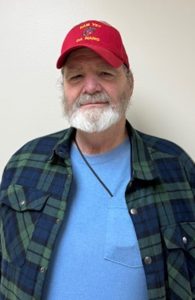
What began as an ordinary day with plans for a non-medical visit to Forks Community Hospital quickly became a life-threatening medical emergency for Paul Rudell. Thanks to the teamwork and coordination of Forks Community Hospital’s integrated system of care, what could have been a tragic outcome became a powerful story of survival and recovery.
From Café to Code Blue
Paul arrived here at the hospital campus, looking forward to sharing lunch and conversation with a friend at Spoons Café. However, Paul never made it to lunch. He collapsed in his vehicle in the parking area. Kristy Roufley, a Spoon’s Café staff member, found Paul unresponsive and without a pulse. Recognizing the emergency, she immediately initiated an overhead Code Blue, activating a rapid response; the first of our staff’s many life-saving actions for Paul.
Help arrived within moments. An EMT, Nik Ness, and Chief Nursing Officer, Kelly Thompson, RN, who were nearby, immediately began CPR, demonstrating expert clinical skill and calm under pressure. Their specialized training and quick decision-making in those critical first minutes were pivotal to Paul’s survival.
Once stabilized, Paul was transferred to the Emergency Department, where care continued seamlessly thanks to our integrated care system. Recognizing the need for higher-level cardiac intervention, he was then transferred to a tertiary hospital for advanced treatment. There, he received the specialized care necessary to support his recovery and address the underlying cause of his cardiac arrest.
Recovery Close to Home with a Trusted Care Team
After completing acute care, Paul returned to Forks Community Hospital, this time as a swing-bed patient. Swing beds are especially important for cardiac patients because they provide the time, support, and rehabilitation needed to regain strength after a serious heart event safely.
Being surrounded by familiar faces and supported by a dedicated, multidisciplinary care team provided comfort, motivation, and a sense of connection, all of which played a vital role in his steady progress toward recovery.
Coordinated Care, Lifelong Impact
With a personalized plan of care and the right tools and guidance, patients like Paul can recover with confidence and lower the risk of complications as they safely return home and transition back to daily life.
We are grateful to report that Paul is doing well today!
From emergency responses to acute care, rehabilitation, and chronic disease management, his story reflects the strength of an integrated healthcare system—and the power of people who show up when it matters most.
Paul’s journey is a testament to the skill, dedication, and compassion of our staff across every care setting. Because of their actions, a lunch date turned into a second chance at life.