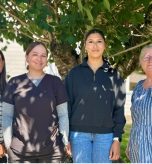

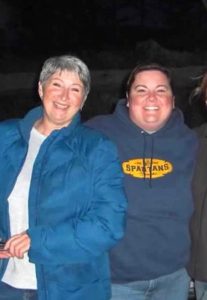
Patient and Daughter, Tina Johnson
When community members, especially those living in rural or remote areas, experience a serious medical event such as a stroke, the path forward can be uncertain. Access to the necessary levels of care often requires traveling far from home, separating patients from their support systems when they need them most.
At Forks Community Hospital (FCH), skilled nursing care (swing bed services), which is a level of care provided to those who are medically stable, in need of care that can only be provided in a hospital, is one of the many services we provide to bridge the gap and ensure patients can remain in the place they call home.
After her first stroke, one local patient was able to transition from inpatient hospital-based care seamlessly into swing bed care. There was no transport, no change of bed within the hospital, just a change in the level of care so that the patient would continue receiving skilled nursing support in a familiar, community-based setting.
For rural families, this kind of care is more than a convenience; it’s essential. Being close to home allows loved ones to stay involved, reduces the burden of travel, and creates a more comfortable environment for healing.
Advocating on Behalf of Patients
When the patient later suffered a second, more severe stroke, she was transported to Olympic Medical Center in Port Angeles. There, it was determined that she was nearing the end of her life. Her family’s wish was clear: they wanted her to return home.
The patient’s daughter, Tina Johnson, shared that despite the challenges of coordinating a transfer over a weekend, the team at FCH stepped in immediately. They worked collaboratively across facilities, advocating for the patient and her family and ensuring she could return to her community for end-of-life care.
The Importance of End-of-Life Care Close to Home
End-of-life care is so much more than medical treatment; it’s about dignity, comfort, and connection. For this patient, being close to home meant being surrounded by familiar faces and voices, and by a community that knew her.
For the patient’s family, it meant the ability to be present.
In rural areas, where distance can often separate families from care, having access to local services like swing bed programs makes a profound difference. It allows families to spend meaningful time together, offering comfort and closure in a setting that feels personal and peaceful.
Supporting the Whole Family
This type of compassionate, personalized care was not a unique experience. Tina’s father, Charles Klepps, was also a swing bed patient.
Tina shares, “Forks Community Hospital supported both my mother and my father through swing bed services. My whole family was impressed with the care they received. It is so important to be close to home as you recover.”
This whole-family approach is a defining strength of FCH, where providers often care for neighbors, friends, and generations of families.
Why Swing Bed Care Matters in Rural Communities
Swing bed services provide continuity of care, reduce the need for long-distance travel, and keep patients connected to their communities.
But beyond the clinical benefits, they offer something even more powerful: the ability to remain close to home during life’s most critical moments.
At FCH, that commitment to community-centered care ensures that patients and families don’t have to choose between quality care and being together, because here, they can have both.