

Ask the Expert
Why Mammograms Matter and What to Expect with Kim Hull
- Home
- Forks News
- Ask the Expert
- Why Mammograms Matter and What to Expect
A mammogram is an important tool for detecting breast cancer early. Knowing when to start screening mammograms and what to expect during your test can help ease anxiety or concerns before you arrive.
At Forks Community Hospital, our Imaging Services team understands that a mammogram isn’t just another image or appointment. A person is behind every exam. Our goal is to provide high-quality imaging while helping our patients feel informed, comfortable, and cared for close to home.
We asked Kim Hull, our Director of Imaging Services, to answer some questions patients may have about mammograms.
Why are mammograms so important?
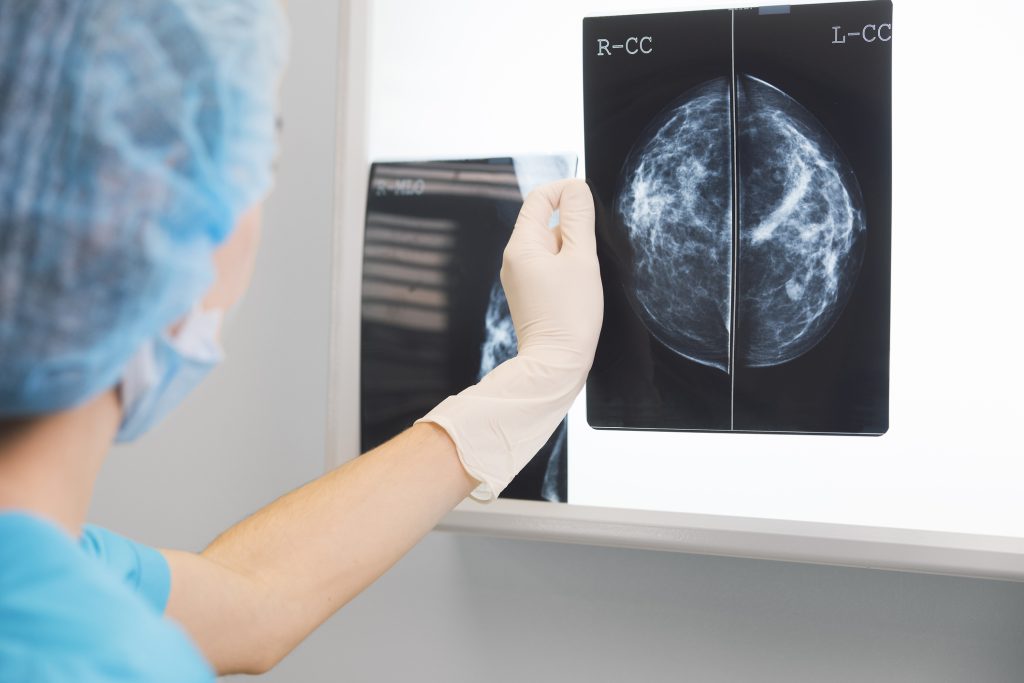
Mammograms can detect changes in breast tissue that may be too small to see or feel. That means they can sometimes identify breast cancer before a patient experiences any symptoms.
From an imaging perspective, that makes mammography such an important screening tool. The images give the radiologist a chance to examine breast tissue closely and identify changes that may need further evaluation
When should I start getting mammograms?
There isn’t necessarily one answer that’s right for every patient. Your age matters. Your personal health history, family history, and other risk factors can also influence when your healthcare professional recommends starting mammograms and how often you should have them.
That’s one reason your annual exam with your healthcare professional matters. It gives you a chance to review your health history, discuss your individual risk factors, and determine whether it’s time for a mammogram.
What actually happens during a mammogram?
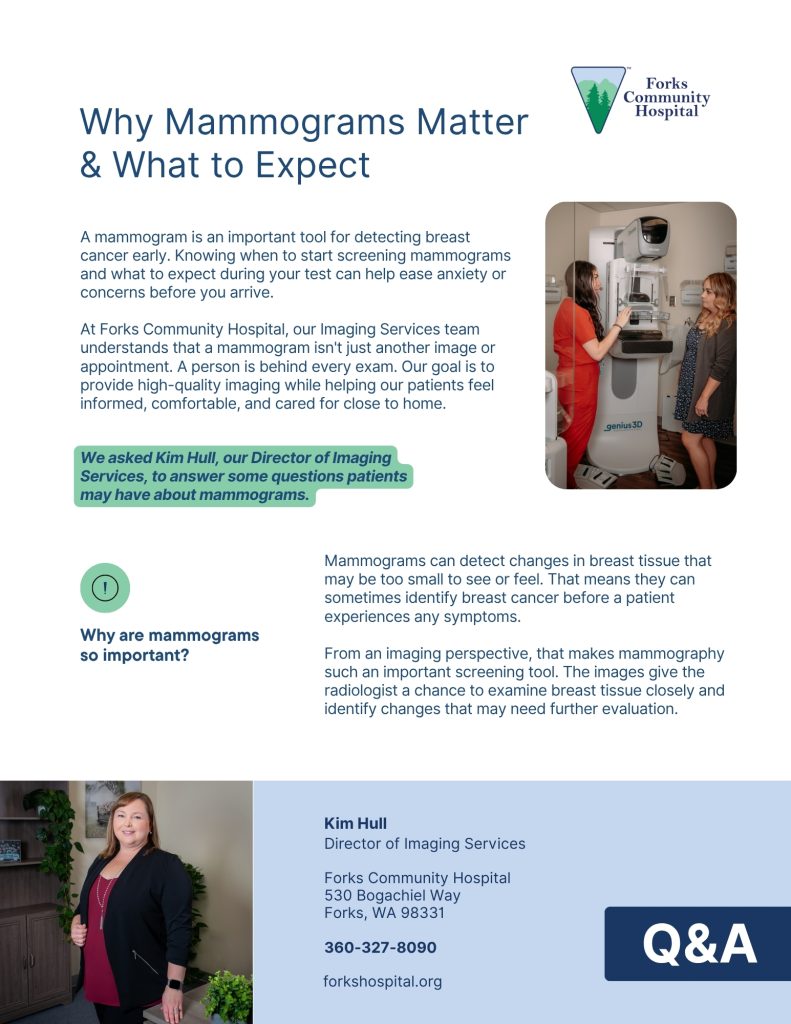
When you arrive for your mammogram, one of our technologists will greet you, take you to the exam room, and have you change into a gown from the waist up. Please note: don’t apply deodorant or perfume on the day of your test. Once you are ready, the technologist will position each breast on the mammography equipment, compress it between two surfaces, and take images from different angles. The compression helps spread the breast tissue so a clear, detailed image can be captured.
Our technologists perform these exams regularly and understand the experience may be unfamiliar or uncomfortable. They explain what they’re doing and help you know what to expect throughout the exam.
Will I experience pain during a mammogram?
Everyone experiences a mammogram differently. You will feel pressure when the breast is compressed, and some patients experience temporary discomfort.
Fortunately, the compression for each image is brief. If you’re particularly sensitive, anxious, or uncomfortable, tell your technologist. Communication helps us work with you while still obtaining the high-quality images needed for your exam.
What if I find a lump or notice something different about my breast?
Don’t wait until your next routine screening mammogram to address a new breast concern.
If you notice a lump, nipple discharge, changes to the breast or nipple, unusual swelling, skin changes, or anything else that concerns you, contact your healthcare professional. They can evaluate the change and determine if imaging is needed.
What would you tell someone who keeps putting off a mammogram because she's nervous?
Tell us you’re nervous.
Our Imaging Services team knows mammography can feel overwhelming. Some patients worry about discomfort. Others worry about what the images might show. Sometimes not knowing what to expect makes people hesitant to schedule the exam.
We’re here to answer questions, explain the process, and make the experience as comfortable as possible. You don’t have to walk through the doors already knowing exactly what will happen. That’s part of our job.
What is the most important thing you want patients to know?
Preventive care starts with conversations about your health before a problem arises.
Make your annual exam a priority. Talk openly with your healthcare professional about your personal and family health history, any changes you’ve noticed, and any concerns you may have. Ask whether a mammogram is recommended for you and, if it is, when you should have one.
And when it’s time for your mammogram, know that the Imaging Services team at Forks Community Hospital is here to provide the imaging you need with compassionate, respectful care right here in our community.
Meet Our Director of Imaging Services

Kim Hull
Director of Imaging Services
Start With Your Annual Exam
Is it time for a mammogram? Start by scheduling your annual exam. Your healthcare professional can review your health history and individual risk factors and discuss when a mammogram is recommended.
Schedule an annual exam with a Forks Community Hospital healthcare professional at one of our Rural Health Clinics. Make preventive care part of your plan for a healthier year.
Looking for a quick reference guide? Download the mammogram Q&A flyer (PDF) below.